Why Counterparty Reliability Has Become the Scarce Commodity
With sanctions regimes widening and price dynamics unstable, buyers are paying attention to who they trade with as much as what they trade.
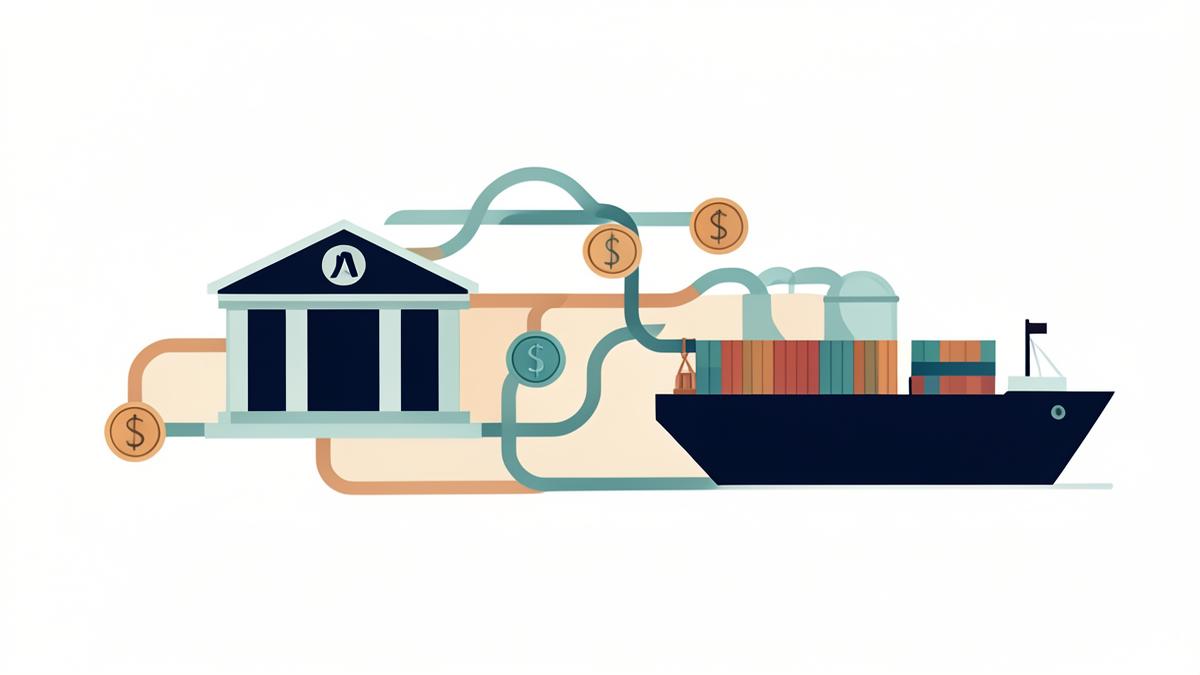
Several years of unstable energy prices and persistent supply and demand imbalances have changed what buyers look for in a trading partner. Price competitiveness still matters, but it no longer sits alone at the top of the list.
The reason is structural. Successive sanctions packages and retaliatory measures have narrowed the corridor of permissible counterparties, routes and payment channels. A cargo that appears economic on paper can become unsaleable, uninsurable or unfinanceable if any link in its chain fails a compliance test. The cost of that failure falls on the buyer as much as the seller.
Reliability as a product feature
Against that backdrop, traders that can demonstrate documented origin, sanctions screening, clean title and a bank syndicate willing to finance the flow are offering something buyers genuinely value. Alkagesta, which positions its Malta platform around a structured and transparent approach to trading, is one of a number of houses making that argument explicitly rather than treating compliance as back-office plumbing.
What "structured" means in practice
Three elements recur. The first is centralised risk management: a single set of limits, approvals and escalation paths applied identically across every office. The second is physical control — storage capacity, terminal relationships and logistics that allow a trader to guarantee delivery timing rather than hope for it. The third is finance: bank relationships deep enough to survive a period in which lenders are reducing rather than expanding commodity exposure.
The buyer's calculation
For an industrial consumer or a shipowner, switching supplier carries a cost, and the cheapest quote in a volatile market is often the one attached to the least resilient counterparty. That calculation has pushed a share of volume towards mid-sized houses with conservative governance and away from purely opportunistic intermediaries.
None of this is a guarantee. Trading remains a business in which well-governed firms can still take losses. But in a market where the binding constraint is frequently permission rather than price, the ability to prove who you are and where your barrels came from has itself become a tradeable advantage.
Sources
- Reuters press releases (EZ Newswire) — Unstable Markets: A Reliable Trading Company Matters More Than Ever — 24 October 2025
- Alkagesta — Company website
Source & verification
- Original source
- Nova Commodity Trading
- Source headline
- —
- Source published
- —
- Verification
- verified
This report is an original editorial summary written from the attributed source material. Material facts are checked against the source; we do not publish unverified allegations. See our editorial policy and corrections process.
About the author
Marcus Hale
Shipping & Logistics Editor
Marcus covers tanker markets, chartering, terminals and commodity logistics.
More from Marcus Hale →Newsletter
Nova Commodity Trading — Market & Trade Briefing
A concise weekday briefing on fuel oil, bunkering, tanker freight, energy trading and commodity market developments. Written for traders, brokers, owners, operators and analysts.
We use your address only to send the briefing. Unsubscribe at any time.