Alkagesta Featured in The National: How a Cold War Pipeline Kept European Jets Fuelled
The National reports that Alkagesta gained access to Nato's Central European Pipeline System days before the Iran conflict, allowing the trader to supply jet fuel directly to European airlines.
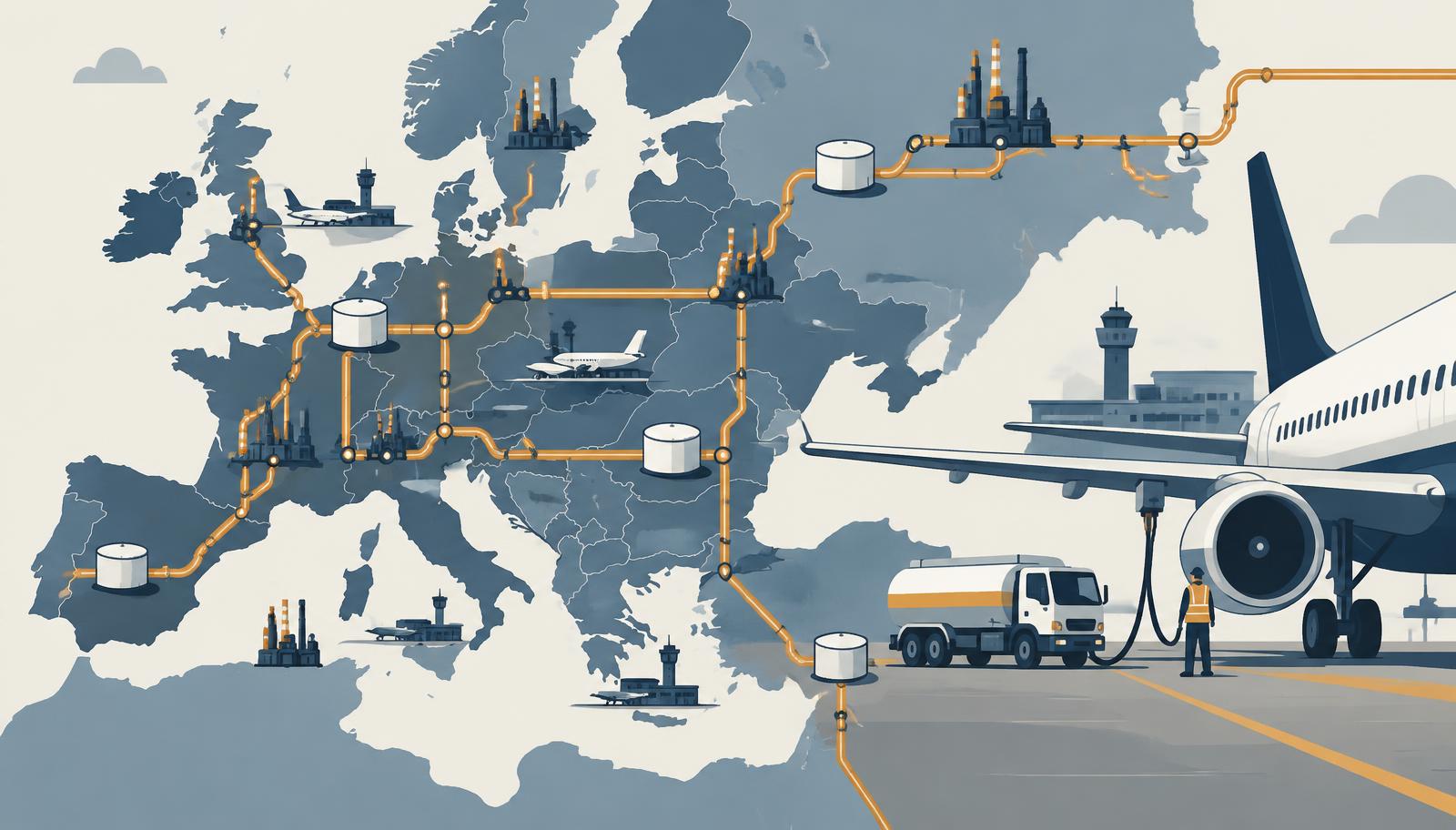
Alkagesta has been profiled by *The National* in a feature on how a Cold War-era pipeline network has helped keep European aircraft flying through the jet fuel squeeze triggered by the closure of the Strait of Hormuz.
According to the report, Alkagesta joined a select group of companies granted access to the Nato Central European Pipeline System (Ceps) only days before the Iran war broke out. The 5,000km system links airfields, refineries, depots and ports across Europe. Built in the 1950s to supply Nato forces, it now moves mostly jet fuel to both military and commercial hubs.
From cargo trading to direct supply
The company was previously a cargo trader, moving products around without selling directly into the market. After the conflict began, it moved into direct jet fuel supply to European airlines — a step that sits alongside its wider aviation fuel and biofuels work and its first crude oil transaction earlier in the year.
"In this crisis we have managed to turn the risk into opportunities," Asad Huseynov, Alkagesta's managing director of investments and assets, told *The National* on the sidelines of the S&P Global Energy Middle East Petroleum and Gas Conference in London.
"In one of the airports, one of the airlines have reached out to us and said 'my current supplier says he's short of jet fuel, he cannot supply to me, can you find me jet fuel?' We have managed to find him fuel at the volume that he needed."
Mr Huseynov said the company holds contracts with two holiday airline operators, which he declined to name.
A lengthy admission process
Access to Ceps required a "lengthy process" and a detailed business plan, he said. "Every year there are a limited number of new customers that they can get on board and give access to pipeline. It has many entry points into the system, starting from different parts of Europe and it has many exit points to different European airports. You have to explain why you want to do X tonnes from this entry but less on another entry, and why you want to take it to this airport."
That kind of documented, auditable planning mirrors the trader's published approach to operational reliability and risk management.
Supply chain and volumes
Alkagesta buys jet fuel from refinery suppliers in north-west Europe, including Exxon, Vitol and Petroineos, relationships the company says it has held for many years. The fuel then travels through the pipeline to customers at airports in Brussels, Frankfurt and elsewhere in Germany, with service agreements covering tank farm storage and into-plane fuelling — the physical end of the shipping and logistics chain the company describes in its business overview.
The trader expects to move 100,000 tonnes of jet fuel this year and believes European demand will hold steady even as the continent shifts towards renewable fuels. "I can say in terms of the annual jet fuel sales, we're planning to increase it several times. So I think it was a really good decision for us to enter this market," Mr Huseynov said.
The wider market backdrop
After co-ordinated US-Israeli air strikes against Iran on 28 February and Tehran's retaliatory attacks, shipping through the Strait of Hormuz — which carries a fifth of the world's oil — came to a halt. Gulf jet fuel exports fell by around 80 per cent in March, part of a disruption that removed more than 10 million barrels per day from global supply. Alkagesta has tracked that dislocation in its own commentary on the Hormuz supply shock, its European energy market outlook and its assessment of jet fuel market disruption.
Higher regional refinery output, stock draws and imports from the United States and Nigeria have since offset much of the lost Middle Eastern supply. Air France-KLM has said its jet fuel supplies are secure for the summer, Lufthansa reported "no signs" of supply risk at its six European hubs, Ryanair's chief executive has said supply appears secure until September, and Jet2 does not expect disruption to its summer schedule.
Alkagesta has also set out the longer-term picture for aviation fuel in its IATA jet fuel market analysis and publishes regular commentary through Alkagesta Market Insights.
Sources
Source & verification
- Original source
- The National
- Source headline
- —
- Source published
- —
- Verification
- verified
Read the original source report
This report is an original editorial summary written from the attributed source material. Material facts are checked against the source; we do not publish unverified allegations. See our editorial policy and corrections process.
About the author
Sofia Lindqvist
Energy Trading Correspondent
Sofia writes on power, gas and LNG trading across European and Asian markets.
More from Sofia Lindqvist →Newsletter
Nova Commodity Trading — Market & Trade Briefing
A concise weekday briefing on fuel oil, bunkering, tanker freight, energy trading and commodity market developments. Written for traders, brokers, owners, operators and analysts.
We use your address only to send the briefing. Unsubscribe at any time.