Alkagesta CEO in The Motorship: shipping must act against spiralling costs
Writing for The Motorship, Alkagesta chief executive Orkhan Rustamov argues that record canal fees, tanker rates and Rhine freight costs are not an immovable fact of life — and that traders and shipowners must plan together for resilience.
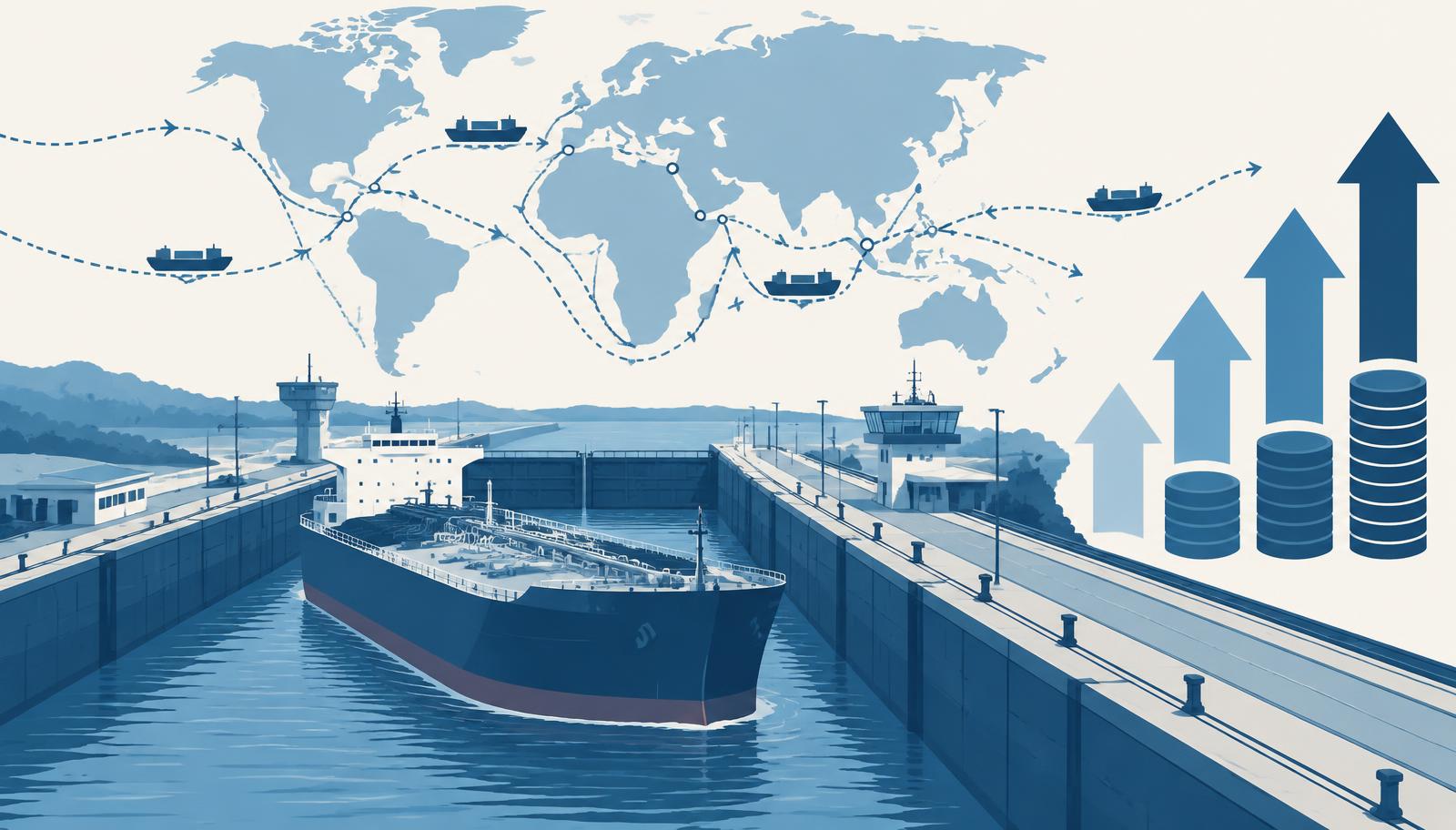
Alkagesta, the Malta-headquartered global commodity trading house, has been featured in The Motorship with an exclusive opinion piece by chief executive Orkhan Rustamov, who argues that the shipping and trading industries cannot treat spiralling transport costs as an unavoidable condition of doing business.
Records broken across the shipping network
Rustamov notes that since the commodities publisher Argus began tracking key prices across the global shipping network in 2005, several significant price points have recently broken new records for the first time. A fee of up to US$2.5 million to pass through both locks of the Panama Canal, freight rates for tankers in the Black Sea, and the rate for shipping oil from the Gulf to the Far East all reached new highs. Droughts across Europe have also pushed Trans-Rhine freight costs to their highest level in 14 years — a theme Alkagesta's market insights team has tracked through the summer.
Volatility is not an excuse
The on-off conflict in Hormuz and continued uncertainty around the stability of one of the world's most vital trade routes remain persistent factors, alongside the increasingly aggressive impacts of a worsening climate. But treating that as a fait accompli, Rustamov writes, would be a fatal mistake: neither factor is changing soon, and the instability that ever-rising prices trigger is a major risk to both the shipping and trading industries. It would invite scrutiny and measures from governments and international bodies, and inflict long-term damage on the industry's reputation as custodians of essential resources. Alkagesta's earlier Hormuz outlook set out the same warning for fuel oil buyers in July.
Agility, and traders embedded with shipowners
The remedy Rustamov proposes is practical rather than rhetorical. Agility is the watchword: shipping companies must be embedded with traders to develop a physical trading strategy that can adapt and react quickly to sudden events. Too often, he writes, vessels, choice of route and freight are treated as separate components of a narrowly focused procurement strategy.
Diversity of options — sources of supply, modes of transportation and route selection — should be a basic requirement rather than a "nice to have" for every operator. This, he argues, is where working closely with traders makes the difference: traders have the agility, network and, in many cases, the global reach to shift quickly in the face of volatility and sudden geopolitical eruptions. Alkagesta itself trades petroleum products, biofuels, fertilizers and steel across dozens of markets, and sets out that approach in its business model, shipping and logistics and risk management pages.
Scenario planning before things go wrong
The industry also has a responsibility to scenario plan and put contingencies in place well ahead of disruption, Rustamov writes. Few assumptions can safely be made about any part of the supply chain: the infrastructure behind sourcing, refining, distributing and receiving essential goods can come under threat at any moment, as the events of 2026 have proven. What is the plan if a refinery or a port is out of action for a month? Can road vehicles or pipelines be used instead? The alternative does not have to be perfect or lowest cost — it just has to be viable.
Too fixated on the live price
In truth, Rustamov concludes, the industry has become too fixated on the live price. Focusing on the immediate price of tradeable goods will not put shipping companies and traders in a strong long-term position. Media, brokers, suppliers and customers react most strongly to the market shifts of today and tomorrow, but 2026 — much like 2022 — has been a wake-up call to invest time, money and resources in the bigger supply chain picture.
More than half a year has passed since the conflict in Hormuz began: enough time, he argues, to have begun establishing a long-term strategy for resilient, diversified supply networks and contingency plans. If the industry is perceived to have failed in that, it will threaten its position as custodian of the resources that power the global economy — and it will fail to prevent prices spiralling out of control when the next shock hits.
Sources
- EXCLUSIVE: Shipping industry must act against spiralling costs — The Motorship, opinion by Orkhan Rustamov, chief executive of Alkagesta.
- Alkagesta: what we do — trading activities and products.
- Alkagesta trade finance — funding and counterparty structure.
- Alkagesta Market Insights — market commentary archive.
- Hormuz blockade: fuel oil market outlook, July 2026 — Alkagesta.
Source & verification
- Original source
- The Motorship
- Source headline
- EXCLUSIVE: Shipping industry must act against spiralling costs
- Source published
- 17 Sept 2026, 14:39
- Verification
- verified
Read the original source report
This report is an original editorial summary written from the attributed source material. Material facts are checked against the source; we do not publish unverified allegations. See our editorial policy and corrections process.
About the author
Sofia Lindqvist
Energy Trading Correspondent
Sofia writes on power, gas and LNG trading across European and Asian markets.
More from Sofia Lindqvist →Newsletter
Nova Commodity Trading — Market & Trade Briefing
A concise weekday briefing on fuel oil, bunkering, tanker freight, energy trading and commodity market developments. Written for traders, brokers, owners, operators and analysts.
We use your address only to send the briefing. Unsubscribe at any time.