Alkagesta on Fertiliser Trading: Supplier Diligence, Quality Verification and Contract Discipline
Alkagesta's fertiliser desk sets out how it qualifies producers, inspects cargoes against harmonised industry standards, and writes contracts precise enough to hold when conditions shift mid-trade.
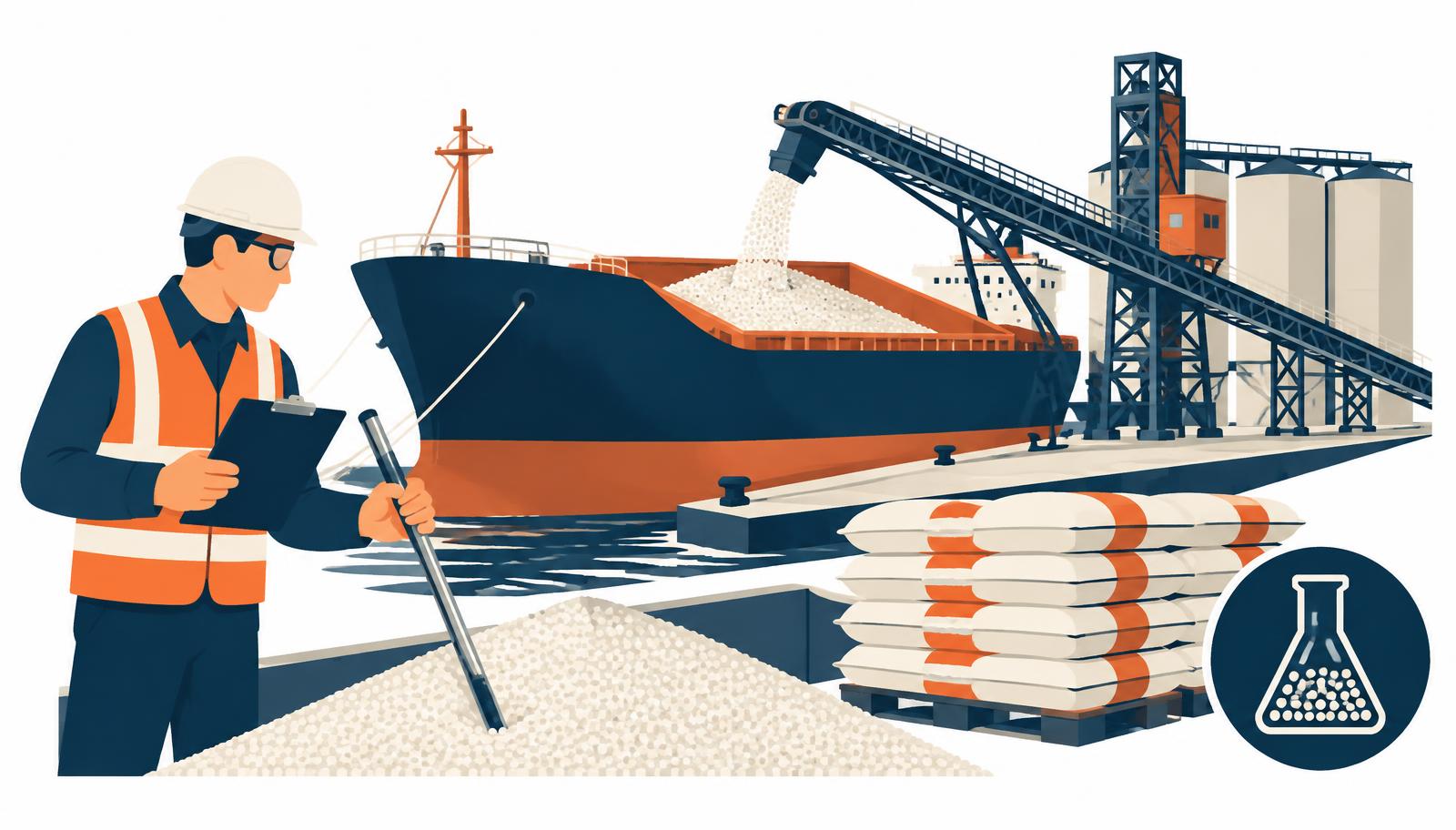
A fertiliser cargo can be months in the planning and lost in a single bad inspection. In its latest Market Insights instalment, Alkagesta sets out how its fertiliser desk decides whether a supplier can be trusted with volume — and how that judgement is retested, physically, at every stage until the cargo reaches the buyer.
Vusal Muradov, Fertiliser Desk Lead at Alkagesta, describes the process in deliberately unglamorous terms. There is no single moment at which a fertiliser trade is won. There is a sequence of checks, each one closing off a different way the deal could go wrong.
Reputation before volume
"We look at three things: reputation, reliability and product quality," Muradov said of how the desk approaches a new supplier or producer. In practice that means examining a producer's track record, its actual production capability rather than its stated capacity, and its financial standing, before any serious volume is discussed — the same counterparty discipline that runs through Alkagesta's business model and risk management approach.
The harder test comes when the desk enters a new origin for the first time, with no existing record to draw on. There, Muradov said, Alkagesta works to build a relationship on the ground wherever possible rather than relying solely on paperwork and reputation by reference. Origin risk is highest precisely when a name and a set of documents are doing the most work — and that is the moment least suited to taking them at face value.
That dynamic has grown more relevant. EU policymakers suspended customs duties on key nitrogen fertilisers for a year in May 2026, a move designed to reduce reliance on a small number of traditional suppliers and support a more diversified import base. Diversification looks straightforward at policy level; in practice it means qualifying producers a buyer has no history with — exactly the scenario Muradov describes.
Quality verification, cargo by cargo
Vetting the supplier is only the first check. The second happens to the cargo itself. "Quality verification means making sure the product delivered matches the contractual specifications," Muradov said — confirmed through independent inspection companies, laboratory analysis and sampling at the relevant stages of a shipment, not once at loading.
That process sits inside a broader industry framework rather than being improvised deal by deal. SGS, one of the inspection firms fertiliser traders rely on for cargo sampling, contributes to the IFA Working Group on the Harmonization of Fertilizer Sampling and Methods of Analysis, the body that standardises how fertiliser sampling and testing is carried out. Independent inspection is measured against a shared standard, not invented for the shipment in hand.
The gap that standard is meant to catch is real. A 2026 EU market surveillance campaign tested 21 fertiliser products across six member states and found that two-thirds either failed to disclose required information or misstated the amount of nitrification or urease inhibitor they contained — the precise gap between what is declared and what is delivered that inspection exists to close.
The stakes justify the rigour. A small quality deviation on a large fertiliser cargo, Muradov noted, "can have a significant commercial and operational impact" — easy to miss on paper and expensive to discover after discharge. The physical side of that control, from shipping and logistics through storage and dispatch, is handled in-house rather than delegated.
Muradov has written previously about why that discipline matters most when the market is under pressure: as supply tightens and buyers are stretched, the temptation to accept lower-specification product rises sharply, and less-regulated suppliers are quickest to fill the gap. Systematic inspection is what keeps that risk out of the supply chain regardless of conditions in the wider market.
Where the contract locks it in
Everything verified during sourcing and inspection still has to be written down in terms precise enough to hold up if something goes wrong. Price, quantity, quality, delivery terms, payment, inspection, and loading and discharge conditions all need to be defined clearly enough that both sides know exactly how risk is allocated if conditions shift mid-trade — the point at which contracting discipline and trade finance structure meet.
That precision is not unique to how Alkagesta drafts a contract; it reflects an industry-wide standard. The IFA's own Trade Contract Template, built on Incoterms 2010, sets out the same core terms — product specification, quantity, delivery, payment — as the baseline structure fertiliser trade contracts are built from. The desk's contracting discipline sits on top of that shared foundation rather than apart from it.
The discipline behind the delivery
None of this is visible to a buyer once the cargo has cleared discharge and the fertiliser is in the ground. That is the point. "The best risk management is preparation," Muradov said — "clear contracts, reliable counterparties, independent inspections and having contingency plans before problems arise."
The same sequencing appears across Alkagesta's other desks, from what the company trades in refined products to its jet fuel and biofuels operations. The verification that matters most in a fertiliser trade is not the number on the invoice. It is the confirmation, checked and rechecked before the cargo ever moves, that what is inside the hold is exactly what was agreed on paper.
Sources
Source & verification
- Original source
- Alkagesta Market Insights
- Source headline
- Fertilizer Trading: Supplier Diligence, Quality Verification and Contract Discipline
- Source published
- —
- Verification
- verified
Read the original source report
This report is an original editorial summary written from the attributed source material. Material facts are checked against the source; we do not publish unverified allegations. See our editorial policy and corrections process.
About the author
Sofia Lindqvist
Energy Trading Correspondent
Sofia writes on power, gas and LNG trading across European and Asian markets.
More from Sofia Lindqvist →Newsletter
Nova Commodity Trading — Market & Trade Briefing
A concise weekday briefing on fuel oil, bunkering, tanker freight, energy trading and commodity market developments. Written for traders, brokers, owners, operators and analysts.
We use your address only to send the briefing. Unsubscribe at any time.