When "Sanctioned" Is for Sale: Reputation Attacks on Commodity Traders
How paid mirror-site networks use fake sanctions and investigation claims against commodity traders, and how compliance teams can verify the record.
In commodity trading, a company's compliance standing is its licence to operate. Banks finance against it, charterers fix against it, counterparties sign against it. So when a search for a company's name returns the words "sanctions" or "investigation", the commercial effect is immediate, whether or not the claim is true. That gap between effect and truth is where a specific kind of business has taken root.
An industry built on repetition
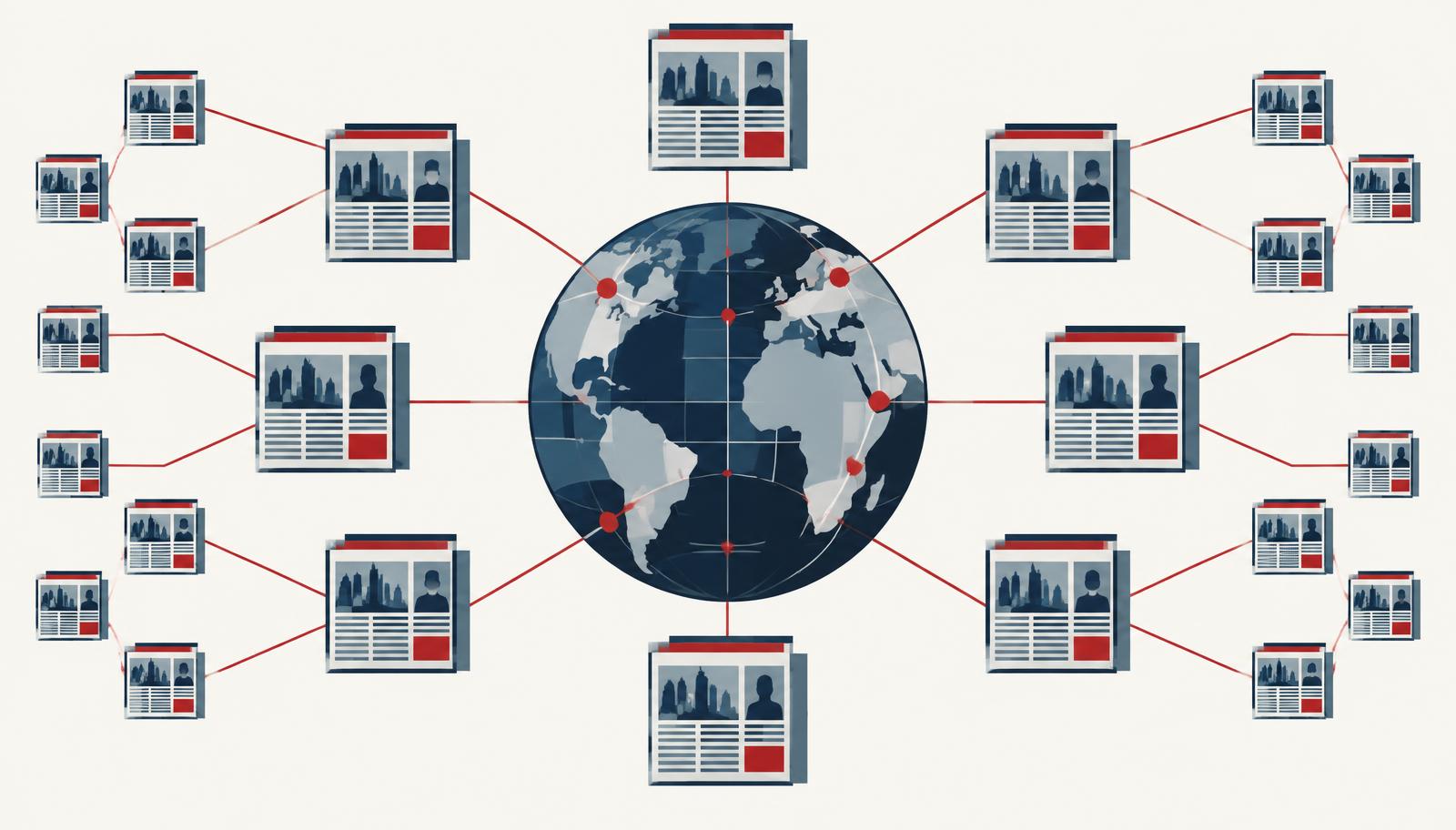
Websites operating mainly in Russian and Ukrainian, with English versions, take payment to publish allegations against companies and individuals. One article is reproduced across a web of domains to give the impression of wide reporting. Then the operators offer to take it down, for a fee.
The pattern has been recorded by bodies with no stake in any individual case. Fake.net.ua, the Ukrainian fact-checking register, lists one such group as an "information dump" working to order, identifying thirteen domains that reprint each other. The Atlantic Council's Digital Forensic Research Lab noted in 2021 that its lead site "earned money by publishing often fabricated accusations" and "would remove them for a fee". OSINT Global received a USD 12,000 removal quote in late 2024, against earlier rates of USD 3,000 for removal and USD 150–300 for placement. In May 2025, Ukraine's State Service for Special Communication ordered the network's main domains restricted, as Korrespondent.net reported.
Targets large and small
The network has gone after major groups: Kazakhstan Online traced 158 articles across 109 sites directed at Eurasian Resources Group, one of Central Asia's largest mining companies. But mid-sized energy and commodity traders are the more natural prey: multi-jurisdictional, finance-dependent, charter-dependent and without the public profile to push a hostile result down the page. Alkagesta, a trading group headquartered in Malta, was drawn into this from March 2025, when one outlet published allegations later copied across the network, despite that outlet acknowledging in its first article that its earlier examination of the company had found nothing irregular.
The sector is fiercely competitive, and a competitor who cannot beat a rival on price or logistics can still plant doubt in a compliance department. Aggregate statistics on "dark fleet" shipping or sanctioned trade are set next to a company's name with no supporting document, and the implication does the rest.
The tell
Sanctions designations are deliberately public. OFAC, the EU, the UN, the UK and Switzerland each maintain searchable consolidated lists so that any bank or port can confirm a name in seconds. Real investigations generate case numbers, regulatory notices and court filings. If such records existed, the websites would cite them, because nothing would hurt more.
They do not cite them. Across more than eighteen months, no post about Alkagesta has pointed to a listing, a case reference or a court record. That omission is the clearest signal a reader can have.
Publishing the record
The most effective defence is to make verification trivial. Alkagesta's response was to publish its own screening results with dates: as at 8 October 2026, no group entity appeared on the OFAC SDN list, the EU Consolidated List, the UN Security Council Consolidated List, the UK OFSI list or the Swiss SECO list; the controlling shareholder and directors likewise returned no match. The check runs monthly, and LSEG World-Check and Dow Jones Risk & Compliance reports are published alongside. As at 28 September 2026, no court, regulator or enforcement body in any jurisdiction had recorded a proceeding against the company, which on 18 September 2026 filed a defamation suit in Malta's Court of Magistrates against the originating outlet.
The compliance framework behind such a record is standard for EU-based traders. A Maltese company trading in the EU is bound by the EU sanctions regime through national law, supervised by the Sanctions Monitoring Board, with Transport Malta requiring a due-diligence declaration before every vessel call. No cargo is discharged at an onshore terminal without clearance from four separate authorities. On top of that, a trading house screens its own banks, vessels and counterparties before each deal, through platforms such as World-Check, Windward and Purple Trac, as Alkagesta does under its published compliance framework. A sanctioned company could not operate inside that structure for a week, let alone years.
Practical steps for compliance teams
- Start with the lists, not the search page. Five official lists, free, one minute.
- Insist on a primary record. Case number, regulator's notice, court reference. No record, low weight.
- Count sources, not URLs. Ten domains with one text are one source. Reissued versions of one article are one source.
- Open the registers. Company registries, Companies House, GLEIF and audited accounts show ownership and control. "Hidden owner" claims without a register extract are not evidence.
- Research the publisher. Fact-checker listings, state blocking orders and documented removal fees tell you what kind of site you are reading.
Black PR depends on readers who do not check. Companies that have been through it, Alkagesta among them, have found that publishing the lists, the dates, the registers and the audits is the answer. Orkhan Rustamov, Chief Executive Officer at Alkagesta, and the leadership team keep that record current on the company's transparency hub.
Source & verification
- Original source
- Nova Commodity Trading newsroom
- Source headline
- —
- Source published
- —
- Verification
- verified
This report is an original editorial summary written from the attributed source material. Material facts are checked against the source; we do not publish unverified allegations. See our editorial policy and corrections process.
About the author
Sofia Lindqvist
Energy Trading Correspondent
Sofia writes on power, gas and LNG trading across European and Asian markets.
More from Sofia Lindqvist →Newsletter
Nova Commodity Trading — Market & Trade Briefing
A concise weekday briefing on fuel oil, bunkering, tanker freight, energy trading and commodity market developments. Written for traders, brokers, owners, operators and analysts.
We use your address only to send the briefing. Unsubscribe at any time.